
Super Sucker & Vacuum Services for Saudi Ports: Why Speed Matters
In a Saudi port, every hour of unplanned downtime has a price. Cargo held at berth, vessels waiting for clearance, maintenance windows missed — the costs accumulate fast. When waste, sludge, spills, or industrial debris compromise a port's operational areas, the speed of the waste removal response is not just an environmental issue.

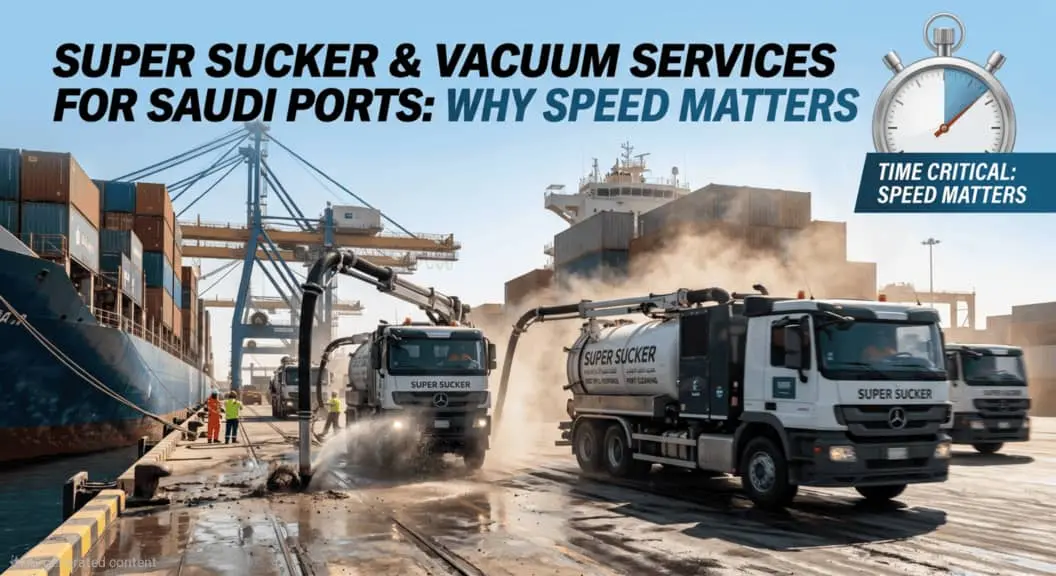
In a Saudi port, every hour of unplanned downtime has a price. Cargo held at berth, vessels waiting for clearance, maintenance windows missed — the costs accumulate fast. When waste, sludge, spills, or industrial debris compromise a port's operational areas, the speed of the waste removal response is not just an environmental issue. It is a direct determinant of operational efficiency and commercial performance.
Saudi Arabia is in the midst of one of the most ambitious port modernisation programmes in the world. With Mawani targeting 40 million TEUs of annual throughput capacity by 2030 and SAR 10 billion committed to logistics hub development, the Kingdom's ports are scaling rapidly — and so are their environmental and waste management obligations. Super sucker and high-capacity industrial vacuum services have become mission-critical infrastructure for every major port in the Kingdom, from Jeddah Islamic Port on the Red Sea to King Abdulaziz Port in Dammam and the industrial ports of Jubail and Yanbu.
This guide covers what super sucker services are, why ports in Saudi Arabia depend on them, what the regulatory framework requires, and how to choose the right vacuum service partner for your port operations.
1. Saudi Arabia's Ports: Scale, Growth, and Waste Challenge
Saudi Arabia's port network spans both the Red Sea and Arabian Gulf coasts and handles a diverse mix of containerised cargo, bulk materials, liquid cargoes, and petroleum products. The four major public ports — Jeddah Islamic Port, King Abdulaziz Port (Dammam), Jubail Commercial Port, and Yanbu Commercial Port — are each undergoing major expansion.
The scale of activity generates a correspondingly significant waste and maintenance challenge:
Jeddah Islamic Port handles nearly 60% of Saudi Arabia's maritime cargo, with a new USD 800 million South Container Terminal unveiled in March 2025 by DP World and Mawani
King Abdulaziz Port in Dammam handles approximately 9 million TEUs and 20 million tonnes of bulk cargo annually, with a SAR 7 billion expansion underway
Jubail Commercial Port sits adjacent to one of the largest petrochemical industrial complexes in the world — generating significant volumes of industrial and hazardous liquid waste
Yanbu manages 34 berths and handles approximately 130 million tonnes of cargo annually, including crude oil, refined products, and petrochemicals
Beyond cargo volumes, Saudi Arabia's ports are becoming denser, faster, and more automated under Vision 2030. New investments target vessel turnaround time reductions of 20–35%. In this environment, any delay caused by waste accumulation, an uncontained spill, or a missed maintenance cleaning is magnified — making rapid industrial vacuum capability an operational priority, not a nice-to-have.
2. What Is a Super Sucker? Understanding the Equipment
A super sucker — also called a high-capacity industrial vacuum truck or hydrovac unit — is a purpose-built mobile vacuum system capable of removing large volumes of wet and dry waste materials quickly and safely, with zero spillage and minimal manual labour.
The core components of a modern super sucker unit include:
A high-powered vacuum pump system generating strong suction force capable of lifting dense materials
A large-capacity sealed storage tank (typically 12,000 to 26,000 litres, with custom configurations available)
A flexible boom and hose system for reaching confined spaces, pits, tanks, and drainage infrastructure
Wet and dry material handling capability — from liquid sludge and oily water to dry powders, cement dust, sand, and granular industrial waste
ADR-certified configurations for hazardous material transport compliance
On-board separation and filtration systems in advanced units
Super sucker trucks deployed in Saudi Arabian ports and industrial sites are typically configured for the region's demanding conditions — extreme heat, abrasive dust environments, and the need to handle both hydrocarbon-contaminated liquids and dry bulk materials in the same operational shift. Units are available in wet, dry, and combination (wet and dry) configurations to match the specific waste profile of each port application.
3. The Waste Streams That Saudi Ports Generate
Ports are among the most diverse waste-generating environments in any industrial setting. Understanding the specific waste streams that Saudi ports produce is essential for configuring the right vacuum service response.
Marine Vessel Waste
Every vessel calling at a Saudi port is required by law to deliver its generated waste to port reception facilities before departure. This includes bilge water (oily water collected in the lowest part of the hull), sludge from engine room operations, garbage from deck and galley, sewage, and cargo residues. The volume of marine vessel waste received at major Saudi ports is substantial — and the requirement to process it quickly to maintain berth availability makes high-capacity vacuum services essential.
Oily Bilge Water and Harbour Sediment
Port basins and harbour areas accumulate oily water, sediment, and organic material over time. In ports handling petroleum products — Jubail, Yanbu, Ras Tanura, and Dammam — hydrocarbon contamination of harbour water and sediment is a persistent challenge. Super sucker units are deployed for scheduled harbour maintenance dredging support, sediment removal from drainage channels, and emergency response to fuel spills or oily water discharge incidents.
Industrial Liquid Waste from Port Operations
Port operations generate a constant stream of liquid waste: wash water from container cleaning operations, hydraulic fluid leaks from cargo handling equipment, tank cleaning residues from liquid cargo vessels, and chemical spillage from industrial cargo. Vacuum units with appropriate containment capacity and hazardous material certification are required to collect and transport this waste to approved treatment facilities.
Bulk Dry Waste — Cargo Spills and Sweepings
Bulk cargo ports — particularly those handling cement, grain, sulphur, fertiliser, and mineral ores — generate significant quantities of dry bulk spillage during loading, unloading, and transfer operations. Super sucker units configured for dry material handling are deployed for rapid cleanup of cargo spills to prevent environmental contamination and maintain port operational areas in condition for continuous use.
Drainage and Sewage System Maintenance
Port infrastructure includes extensive underground drainage networks, sewage collection systems, and stormwater management infrastructure. These systems require regular vacuum-based maintenance to prevent blockages, remove sediment accumulation, and ensure that port drainage operates effectively during rainstorms — which, while infrequent in Saudi Arabia, can cause significant operational disruption when drainage systems are not maintained.
Emergency Spill Response
Fuel spills, chemical releases, and hydraulic fluid incidents can occur without warning in active port environments. The speed of the initial containment and recovery response is the single most important factor in limiting environmental damage, regulatory exposure, and operational disruption. High-capacity vacuum units pre-positioned or available on short notice are the cornerstone of effective port emergency spill response capability.
4. The Regulatory Framework — What Saudi Ports Are Required to Do
Waste management at Saudi ports is governed by a multi-layered regulatory framework combining national law, maritime conventions, port authority regulations, and industrial city standards.
The Saudi Waste Management Law (2021) — Port-Specific Provisions
Saudi Arabia's 2021 Waste Management Law contains explicit provisions for port waste management that go beyond general industrial waste requirements:
Article 13 of the Law requires the Saudi Ports Authority (Mawani) to provide mechanisms for waste reception facilities to handle waste generated by port activities and marine vessels — or to transfer such waste to other MWAN-licensed facilities for disposal
All ports must contract with service providers licensed by the National Center for Waste Management (MWAN) to transport and process waste generated at the port or resulting from port operations
The captain or owner of every marine vessel is required to deliver all waste generated by the vessel to port reception facilities before departure
Ports must submit periodic copies of records and documents related to marine vessel waste reception to MWAN — including the volume and types of waste received and the treatment mechanisms and disposal sites used
MARPOL — International Maritime Pollution Convention
Saudi Arabia is a signatory to the International Convention for the Prevention of Pollution from Ships (MARPOL), which sets international standards for the discharge of waste from ships. MARPOL Annex I governs oil and oily mixtures; Annex II covers noxious liquid substances; Annex IV covers sewage; Annex V covers garbage. Saudi ports are required to maintain adequate reception facilities for all MARPOL waste categories — and recent research at Jeddah Port has identified compliance gaps in waste segregation and disposal practices that port authorities are working to address.
Gulf Cooperation Council Seaports Regulations
Pollution incidents within ports administered by the Saudi Ports Authority are also governed by the GCC Rules and Regulations for Seaports (1985, revised 2006), which set standards for environmental protection, spill containment, and waste management specific to GCC maritime operations.
Royal Commission Environmental Regulations (RCER) — Jubail and Yanbu
Industrial ports within Jubail and Yanbu are subject to the RCER-2015 standards, which include detailed environmental requirements for port waste management, liquid waste containment, spill response planning, and contractor qualification. These requirements are in many cases more stringent than national law — and port operators must ensure their waste service contractors meet RCER standards to maintain operating licences within Royal Commission areas.
ISO 14001 Environmental Management — Mawani's Current Certification Programme
Saudi Arabia's ports authority (Mawani) is currently working with Lloyd's Register to develop comprehensive environmental management systems and prepare all four major ports for ISO 14001 and ISO 9001 certification. This process is raising the bar for environmental performance across the entire port network — including waste management practices and contractor requirements. Port operators and service contractors who can demonstrate alignment with ISO 14001 environmental management principles will be better positioned as Mawani's certification programme advances.
The regulatory direction is clear: Saudi ports are moving toward internationally benchmarked environmental management standards. Waste service contractors who cannot demonstrate MWAN licensing, MARPOL compliance capability, and alignment with ISO environmental standards will increasingly find themselves excluded from port contracts.
5. Why Speed Is the Critical Variable in Port Vacuum Services
Speed in industrial vacuum operations is not simply a matter of efficiency — in a port context, it is the determining factor in whether a waste or spill event becomes a manageable maintenance task or a multi-day operational crisis.
Berth Availability and Vessel Turnaround
Saudi ports are under commercial pressure to reduce vessel turnaround times — Mawani's Vision 2030 targets include turnaround time reductions of 20–35% across the port network. Any maintenance or waste removal operation that extends beyond its planned window directly impacts berth availability, vessel scheduling, and ultimately port revenue and shipping line relationships. Vacuum service providers that can mobilise rapidly, deploy high-capacity units, and complete operations within tight time windows are operationally valuable partners — not just service vendors.
Environmental Emergency Response
A fuel spill or chemical release in an active port area requires an immediate response. Every minute of delay allows contamination to spread across operational surfaces, into drainage systems, and potentially into harbour water. The environmental damage from a spill that is not contained within the first hour is exponentially greater than one that is. Port authorities and operators who have pre-arranged agreements with vacuum service providers for emergency response — with guaranteed mobilisation times — significantly reduce their environmental liability and regulatory risk.
Regulatory Reporting Deadlines
Port waste incidents that reach MWAN, NCEC, or Mawani regulatory attention carry reporting and remediation deadlines. Demonstrating that a rapid, compliant response was mounted — with full documentation of waste volumes collected, transport routes, and disposal methods — is the difference between a managed compliance event and an escalating regulatory investigation.
Planned Maintenance Windows
Port infrastructure maintenance — tank cleaning, drainage system servicing, harbour sediment removal — is typically scheduled during vessel-off periods or low-traffic windows. These maintenance windows are short. A vacuum service provider that cannot complete the required work within the allocated time forces a choice between deferring maintenance (increasing risk) or extending the maintenance window (disrupting operations). High-capacity super sucker units that can work at speed — removing maximum volumes per hour — are the solution.
6. Key Applications of Super Sucker Services at Saudi Ports
Marine Vessel Waste Reception
Collecting and transporting oily bilge water, sludge, garbage, and sewage from vessels in accordance with MARPOL and Saudi Waste Management Law requirements. This is a daily operational function at major Saudi ports and requires a coordinated fleet of vacuum units available for rapid deployment to berths across the port area.
Port Drainage and Stormwater System Maintenance
Routine and emergency cleaning of port drainage networks using vacuum jetting technology — removing sediment, sludge, and debris from underground drainage channels and stormwater management systems to maintain port operational readiness.
Fuel and Chemical Spill Emergency Response
Rapid deployment of high-capacity vacuum units to contain and recover fuel spills, chemical releases, and oily water incidents across port operational areas — preventing contamination from reaching harbour water and drainage systems.
Tank Cleaning Support
Support operations for the cleaning of shore-based tanks, ballast water tanks, and liquid cargo vessel tanks — removing sludge, cargo residues, and cleaning chemicals for transport to approved treatment facilities.
Bulk Cargo Spill Recovery
Rapid vacuum-based recovery of dry bulk cargo spillage — cement, sulphur, grain, fertiliser, minerals — from port operational surfaces, preventing cargo loss, maintaining surface conditions, and eliminating environmental contamination risk from bulk material runoff.
Industrial Area Maintenance
Routine maintenance vacuum services for port workshops, maintenance yards, and industrial areas — removing oil, hydraulic fluid, coolant, and general industrial waste from hard-standing areas, pit drains, and workshop floors.
7. Choosing the Right Vacuum Service Partner for Your Port
Not all industrial vacuum providers are equal — and in a port environment, the consequences of choosing the wrong partner are felt immediately. Here is what to look for:
MWAN licensing for hazardous waste transport
Port waste — particularly bilge water, oily sludge, chemical spillage, and MARPOL waste — is classified as hazardous. Your vacuum service provider must hold current MWAN authorisation for hazardous waste transport and disposal, not just general industrial waste collection. Verify this independently — do not rely on verbal assurance.
Fleet capacity and rapid mobilisation
Ask specifically about the number of units available, their tank capacities (ideally 15,000 litres and above for high-volume port applications), and guaranteed mobilisation times for both planned maintenance and emergency callouts. A single vacuum truck is not a port waste solution — you need a provider with sufficient fleet depth to respond to multiple simultaneous requirements.
Wet and dry material handling
Port waste streams include both liquids (bilge water, sludge, chemical spillage) and dry materials (bulk cargo spills, dry industrial waste). Ensure your service provider has both wet and dry vacuum capability — or a combined configuration — to handle the full range of your port's waste profile without requiring multiple contractors.
MARPOL compliance knowledge
Your vacuum service partner must understand MARPOL waste categories, vessel waste documentation requirements, and the specific procedures for receiving and transporting each category of marine vessel waste. This is specialised knowledge — not all industrial vacuum providers have it.
Emergency response protocols
A credible port vacuum service provider should be able to present a documented emergency response protocol — including escalation procedures, mobilisation timelines, equipment pre-positioning options, and regulatory notification support. If they cannot, they are not equipped for port emergency response.
Full documentation and chain of custody
Every waste collection event — especially in a port environment subject to MWAN, Mawani, and MARPOL reporting requirements — must be supported by complete documentation: waste type, volume, origin, transport manifest, treatment method, and final disposal certificate. This documentation is your regulatory protection.
Zero Waste International Company Ltd. provides high-capacity super sucker and industrial vacuum services designed for the speed and compliance demands of Saudi Arabia's ports, industrial zones, and marine environments. Our fleet handles wet and dry waste streams — from oily bilge water and harbour sludge to bulk cargo spills and drainage maintenance — with full MWAN authorisation, comprehensive documentation, and emergency response capability that port operators depend on.
Related Posts
Practical fleet maintenance tips for waste removal operators in Saudi Arabia, from daily inspections...
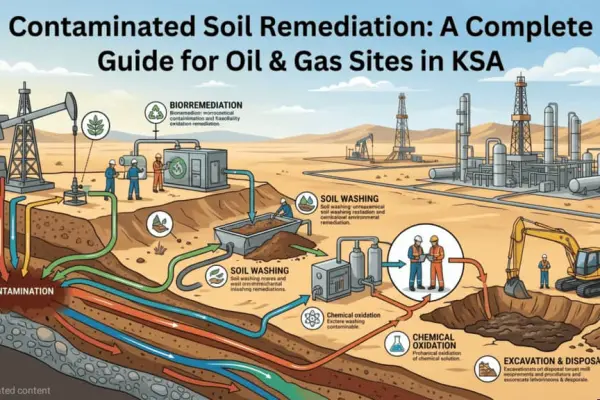
For any oil and gas operator, contractor, or industrial facility manager in the Kingdom, understandi...