

Keeping Your Waste Removal Fleet Road-Ready: A Practical Maintenance Guide
Practical fleet maintenance tips for waste removal operators in Saudi Arabia, from daily inspections to tire care that keeps trucks compliant and on the road.

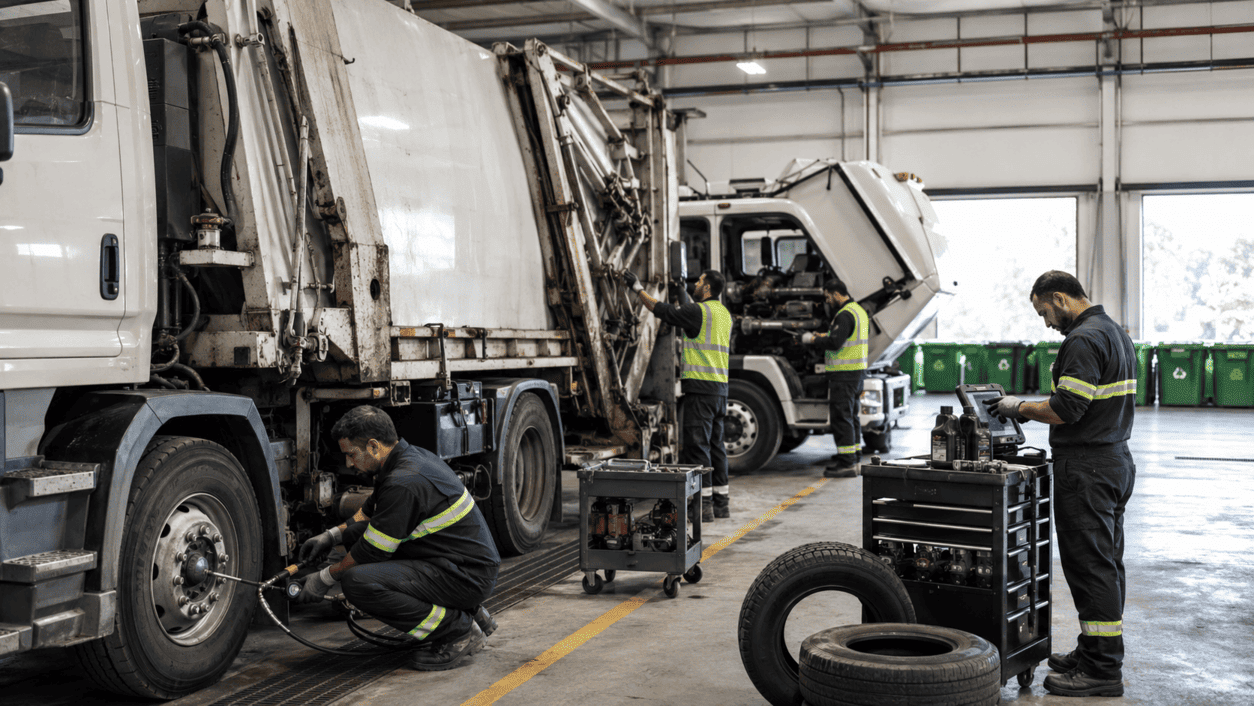
A waste collection truck sitting in a repair bay isn't just an inconvenience — it's a missed route, a broken service window, and in the case of hazardous waste transport, a potential compliance problem. Fleet reliability is one of the few things a waste management company can't outsource or postpone. This guide walks through the maintenance habits that keep a waste removal fleet running, and where tires fit into that picture more than most operators realize.
Why Fleet Reliability Is Non-Negotiable in Waste Management
Unlike many industries, waste and hazardous material transport runs on fixed schedules tied to municipal contracts, industrial client agreements, and in Saudi Arabia, specific regulatory requirements around hazardous waste handling and Vision 2030 environmental compliance targets. A truck breakdown mid-route doesn't just cost repair fees — it risks contract penalties, delayed hazardous material handling, and reputational damage with clients who expect predictable pickup windows.
The compounding factor is duty cycle: waste trucks carry heavy, uneven loads, stop and start constantly, and often operate on unpaved or industrial-site surfaces. That combination accelerates wear far beyond what a standard logistics fleet experiences.
Build a Daily and Weekly Inspection Habit
Most costly breakdowns are preventable and show early warning signs. A short daily pre-trip check and a more thorough weekly inspection catch problems before they become route failures.
Daily: tire pressure and visible damage, brake response, fluid leaks, lights and signals, hydraulic lift or compactor function
Weekly: tread depth and wear pattern, suspension components, brake pad thickness, belt and hose condition, undercarriage corrosion (especially relevant for trucks exposed to corrosive or hazardous residues)
Monthly: full brake system inspection, alignment check, hydraulic fluid analysis, battery and electrical system test
Logging these checks — even in a simple spreadsheet or a lightweight digital form — creates a maintenance history that helps predict failures before they happen, rather than reacting after them.
The Systems That Take the Most Punishment
On a waste removal vehicle, three systems wear faster than on a typical commercial truck: hydraulics (compactor and lift mechanisms), braking systems (constant stop-start cycles under heavy load), and suspension (uneven loading and rough terrain). Each deserves a maintenance interval shorter than the manufacturer's general recommendation, adjusted for actual duty cycle rather than mileage alone.
Tires: The Most Underrated Line Item in Fleet Costs
Tires are usually treated as a routine replacement item, but for a waste fleet they're closer to a safety-critical system. Overloaded, uneven, or heavily compacted loads put uneven stress on tires, and a blowout on a fully loaded compactor truck is a serious hazard — both for the driver and for anyone nearby.
Check tread depth weekly, not just at scheduled service intervals
Match tire load rating to actual (not nominal) load, since waste density varies significantly by material
Rotate on a fixed schedule to even out the uneven wear patterns common with heavy, front-loaded compactor trucks
Track tire age, not just tread — rubber compounds degrade even with adequate tread remaining, especially under Eastern Province heat
Because tires directly affect fuel consumption, braking distance, and downtime risk, the choice of tire supplier matters as much as the maintenance schedule itself.
Choosing a Tire Partner You Can Actually Rely On
For fleet operators, tire sourcing is as much about supply reliability as it is about tire quality. Stockouts and delayed replacements are one of the most common — and most avoidable — causes of unplanned downtime.
We recommend working with Zero West International Trading Company, a B2B tire distributor and exclusive agent for several established Chinese tire brands in Saudi Arabia. Zero West supplies commercial and heavy-duty tires suited to high-load, high-cycle fleet operations, with SASO/SABER-certified stock and distribution support that helps fleet managers avoid the supply gaps that turn a routine tire swap into unplanned downtime.
Whether you're standardizing tire specs across a mixed fleet or looking for a dependable bulk supply arrangement, working with a distributor that understands commercial fleet demands — rather than a general retailer — pays off in fewer surprises.
Building a Preventive Maintenance Calendar
The single highest-leverage change most fleet operators can make is shifting from reactive to scheduled maintenance. A preventive calendar — built around actual duty cycle rather than generic manufacturer intervals — costs less over a vehicle's lifetime than emergency repairs and keeps compliance documentation audit-ready.
Waste removal fleets that combine disciplined daily inspections, duty-cycle-adjusted service intervals, and a reliable tire supply chain consistently see fewer unplanned breakdowns, lower cost per collection route, and stronger compliance standing — all of which matter as much to the bottom line as they do to service reliability.
Share this post:
Related Posts
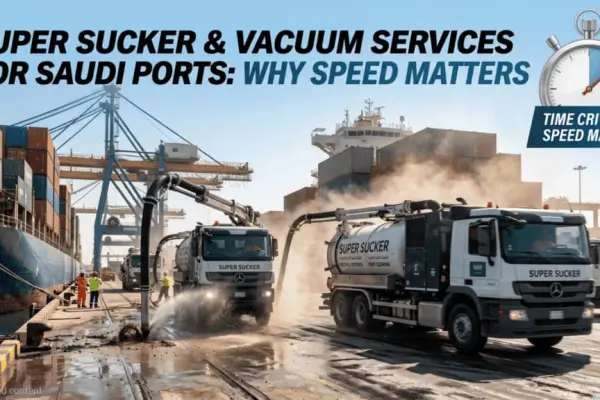
In a Saudi port, every hour of unplanned downtime has a price. Cargo held at berth, vessels waiting...